

Electrical Safety in Electronics Manufacturing
Electrical safety is a central concern in electronics manufacturing, where even minor oversights can have serious consequences. In these fast-paced environments, unique risks and specialized hazards demand a higher standard of awareness, preparation and ongoing commitment to diligent safety practices.
According to the U.S. Department of Labor, the U.S. manufacturing sector, including electronics manufacturing, experienced 391 fatal occupational injuries in 2023. Meeting and exceeding Occupational Safety and Health Administration (OSHA) standards is essential for protecting workers from industry-specific hazards.
The Hidden Dangers of Exposed Circuitry and Bare Boards
Electronic manufacturing environments involve rapid product changes, densely packed boards and frequent manual intervention. These factors increase exposure to live circuitry, micro-scale faults and hard-to-predict hazards.
One of the most overlooked risks comes from stored-energy components, such as capacitors. Even when power is completely disconnected, capacitors can retain a dangerous charge long after shutdown. During safety checks, rework or late-stage assembly, technicians reaching for one of these boards may inadvertently encounter voltage levels strong enough to cause severe injury.
Adding to the challenge, “hot” testing environments require technicians to work directly with energized systems. This necessary step in quality control exposes staff to potential arcs, shocks and sudden malfunctions, demanding specialized procedures and continuous vigilance beyond conventional electrical safety standards.
The Effect of Electrical Shock on the Human Body
The effect of electric shock on the human body can range from unnoticeable to fatal, depending on the amount of current that flows. Several factors affect the amount of current a human body experiences, including sweat level and shoe selection. Due to such differences, two people touching an identical voltage may have entirely different experiences. In mild cases, electrical shock can result in mild tingling, while higher voltage shocks can result in internal organ damage and cell breakdown or death.
Identifying Key Electrical Hazards in Assembly Environments
Assembly lines present a range of unique electrical hazards that require targeted attention, with risks stemming from both the manufacturing environment and the inherent complexity of the devices produced. Key safety hazards in electrical engineering include:
- Electrical shock: When a human body becomes part of the electrical circuit, the person will experience an electrical shock. This shock can result in a range of injuries, from minor discomfort to death.
- Arc flash: An arc flash is a rapid release of energy due to an arcing fault. This hazard occurs during short circuits in high-power test fixtures and can result in violent explosions, fires and severe burns.
- Electrostatic discharge (ESD): There is a misconception that ESD gear protects workers. In reality, gear like grounding wrist straps is for product safety, not personnel safety.
- Improper grounding: Improper grounding is a serious hazard. When a circuit lacks a path to the ground, it will find an alternative path, which could involve jumping to another live component or passing through a worker.
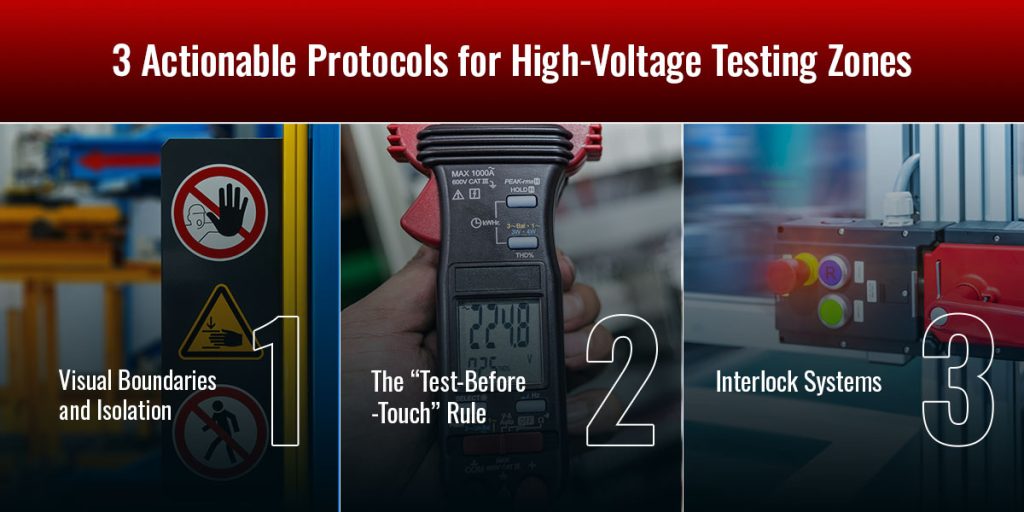
3 Actionable Protocols for High-Voltage Testing Zones
Effective high-voltage testing demands proactive steps to minimize risk and safeguard workers. The following protocols significantly reduce exposure to electrical hazards in these specialized areas:
1. Visual Boundaries and Isolation
Marking hot testing areas requires isolating the station, installing proper signage and using floor markings. Signage should specify voltage levels and indicate that only authorized personnel can be in the area. Use specific colors to indicate warnings or danger levels. These visual boundaries are critical to alerting staff and visitors to elevated risk and help ensure that only authorized, properly equipped personnel can enter these areas during live testing procedures.
2. The “Test-Before-Touch” Rule
This rule requires workers to ensure that electrical equipment is de-energized before touching it. Testing means checking equipment with properly rated voltage testers and, for high-capacitance boards, using approved discharge sticks to ensure no potentially lethal stored charge remains even when the system appears powered down. Embedding this disciplined approach into standard operating procedures dramatically reduces the risk of accidental electric shock and enforces a culture of vigilance.
3. Interlock Systems
Automated interlock systems and electromechanical safety devices are a critical layer of protection for high-voltage test fixtures. These safety mechanisms should instantly disconnect power if a worker opens an enclosure or access panel. This process is designed to make the device safe to touch. By removing human error from the equation, interlock systems aim to prevent accidental exposure to hazardous voltages and promote a safer testing environment. For best results, teams should regularly test these systems and implement maintenance to ensure reliable functionality on every use.
Essential PPE and Training for Electronics Personnel
Protecting electronics personnel goes beyond basic awareness. Safe workplaces require the right personal protective equipment (PPE) and provide a foundation of practical, hands-on safety training tailored to the unique hazards found in this industry.
Targeted Protection: Protective Equipment Relevant to Electronics
Choosing the proper PPE is essential for ensuring safety in the electronics industry, where specialized gear can mean the difference between minor incidents and serious injury during electrical work. Critical PPE includes:
- Voltage-rated gloves: Cotton assembly gloves are not adequate for working with high voltages. Choose insulated gloves that are easy to work with.
- Safety glasses with side shields: Face and head equipment is critical. Face shields and safety glasses protect workers from arc flashes and intense heat.
- Flame-resistant (FR) clothing: For applications where arc flash is a risk, FR clothing is critical for reducing risk. You can also find FR aprons and smocks for added protection.
- Safety boots: Workers should wear footwear that does not conduct electricity. Sturdy leather or rubber boots can reduce slipping risks and protect workers from electrical hazards.
Competency-Based and Hands-On Training
Maintaining electrically safe work conditions requires teams to adopt a practical learning approach that demonstrates employee competency and allows workers to gain practical experience with electrical applications. OSHA electrical safety standards require employees who face shock risks to complete training to recognize, avoid and mitigate electrical risks. However, classroom instruction alone is not enough. Truly effective training should include hands-on exercises, real-world simulations and regular skill assessments to ensure workers can apply safety protocols in practice.
Ongoing, competency-based training helps reinforce critical concepts and adapts as technology changes, enabling teams to respond confidently to new or unexpected hazards. Integrating hands-on elements into your safety guide for electronic products ensures that employees understand and can perform the procedures necessary to maintain a safe work environment. This practical approach builds lasting safety habits, reduces errors and keeps both personnel and products protected on the job.
Lockout/Tagout (LOTO) for Maintenance
The Lockout/Tagout (LOTO) procedure is a safety practice for protecting workers during machine maintenance. Proper procedures follow these steps:
- Preparation: Authorized employees must identify specific hazards and understand how to control hazardous energy.
- Shutdown: Teams shut down the equipment or machine that will undergo servicing.
- Isolation: Workers must isolate the equipment, which could involve shutting a valve, turning off power at a breaker or something else.
- LOTO: An authorized worker attaches a lockout/tagout device to each isolated machine. These devices prevent unexpected equipment startup and include tags with the name of the person performing the lockout and other relevant information.
- Stored energy check: Workers inspect the equipment for residual energy that could cause harm if unreleased.
- Isolation verification: An authorized employee double-checks that the machine is isolated and de-energized.

Maintain Electrical Safety in the Workplace
Adhering to rigorous safety protocols protects your workforce and safeguards product integrity. Proactive measures, hands-on training and proper equipment are essential for minimizing risk and maintaining a culture of vigilance. By partnering with experts like Lectronix, Inc., you gain access to advanced manufacturing solutions and experienced teams who prioritize safety at every step.
Lectronix, Inc. is a leading supplier of electronic hardware and software technology. We’re committed to delivering quality and security in every project. Our electronic manufacturing services include:
- Logistics
- Prototyping
- PCB assembly
- Mass production
- Systems assembly
- Inspections and testing
- New product introduction
Allow us to assist you with electronic innovations. Protect your people, ensure your product’s performance and build lasting success with a manufacturing partner that puts safety first. Contact us for a personalized quote.